

China runs a parallel internet that surprises most first-time visitors. The largest American social networks and video platforms do not operate on the mainland, so over the past two decades Chinese companies built homegrown replacements that now serve more than a billion users. The result is not a copy of the Western web but a separate ecosystem with its own super-apps, payment rails, and content habits. Anyone doing business with China, studying its tech sector, or simply travelling there needs a working map of which platforms matter and how they differ from their familiar counterparts.
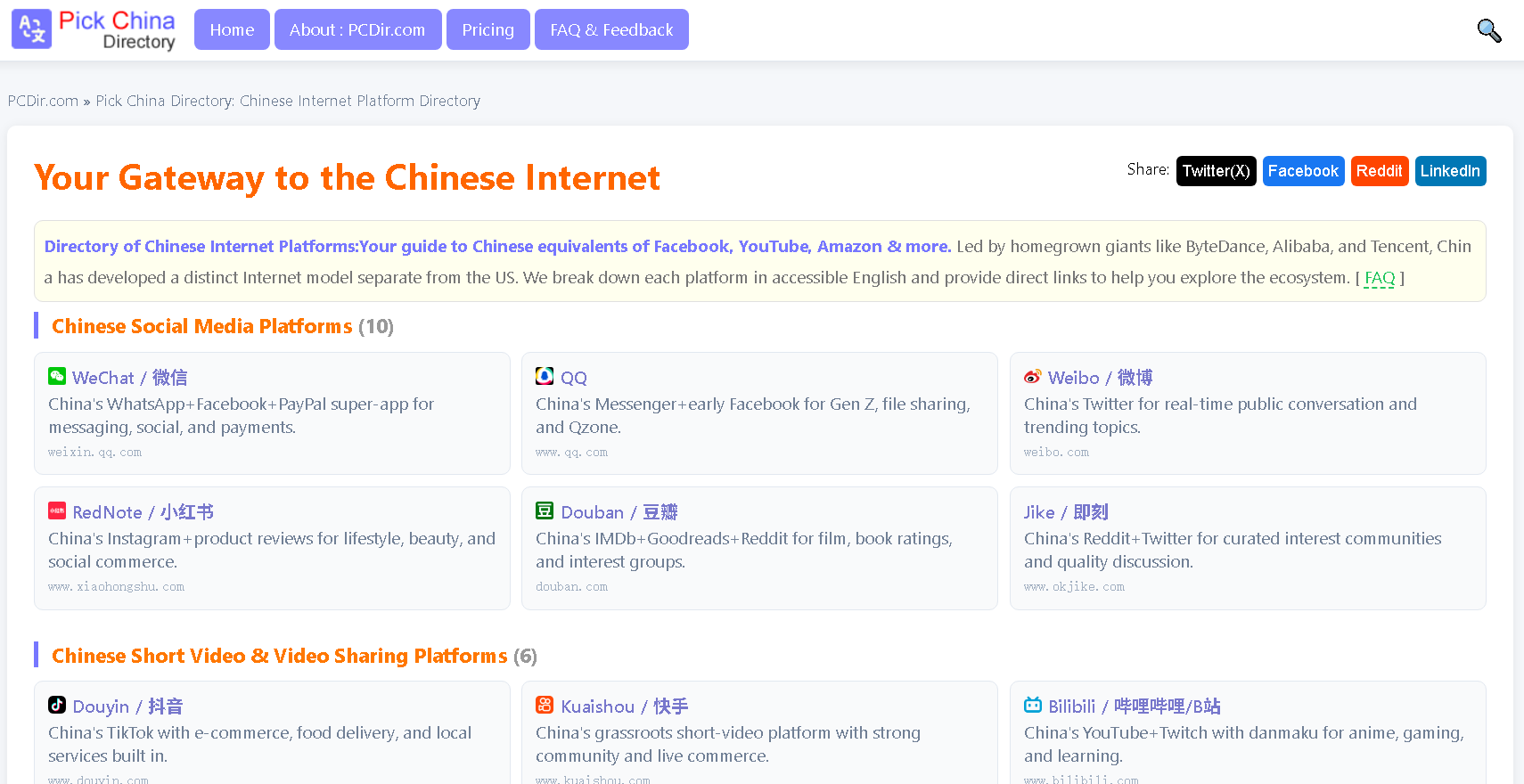
Each major Western service tends to map to one or more Chinese equivalents. WeChat combines messaging, social networking, payments, and mini-programs in a single app, covering ground that in the West is split between WhatsApp, Facebook, Apple Pay, and the mobile web. Douyin, the domestic sibling of TikTok, dominates short video, while Xiaohongshu blends Instagram-style lifestyle content with e-commerce reviews. On the shopping side, Taobao and JD.com anchor traditional e-commerce, and Pinduoduo pioneered team-buying discounts that turned online shopping into a social game. Searching, streaming, and news each have their own national champions as well.
Why the Split Happened
The divergence was not purely regulatory. Early Chinese portals did imitate American models closely, but the arrival of the smartphone era changed the trajectory. With mobile adoption outpacing desktop ownership, Chinese firms designed for small screens first and treated websites as secondary. WeChat’s Official Accounts and mini-programs let restaurants, airlines, and government bureaus operate entirely inside the chat interface, so millions of users rarely open a browser at all. Some companies have even retired their desktop sites because the app renders them redundant. This app-first pattern explains why Western visitors often find Chinese websites clunkier than expected: the real product lives inside the phone.
Two Cases That Show How Different It Gets
Consider live-stream commerce, a format that fuses entertainment with instant purchasing. A host demonstrates cosmetics or fresh produce on camera while viewers tap to buy without leaving the stream, and top sellers move staggering volumes in a single evening. Western platforms have experimented with shoppable video for years, yet nothing abroad matches the scale or conversion rates seen on Taobao Live and Douyin. The difference comes from tight integration between content, payments, and logistics: one account, one wallet, next-day delivery.
A second case is the mini-program economy inside WeChat. A neighbourhood noodle shop can launch a storefront, loyalty scheme, and delivery booking without building a website or installing point-of-sale software. Customers scan a QR code at the table, order, pay, and collect points, all within the chat app they already open dozens of times a day. For small merchants this lowers the barrier to digitisation dramatically, and for users it means everyday services cluster inside one or two super-apps rather than scattering across dozens of standalone sites. Readers looking for a structured starting point can browse this English-language guide to Chinese websites to see how each category maps to services they already know.
How to Approach the Ecosystem Practically
Start from categories rather than brand names. Social media, short video, live streaming, film and music, gaming, web novels, e-commerce, fintech, search, news, travel, and local services each have distinct leaders, and knowing the category instantly narrows the field. Check whether a platform works outside China before relying on it: some apps are available in overseas stores with limited features, while others require a mainland phone number to register. User numbers and ownership change fast in this market, so treat any statistic as a snapshot and verify it against the platform’s own announcements where possible.
What to Watch Next
Artificial intelligence apps, cross-border e-commerce, and short drama streaming are currently the fastest-moving corners of the Chinese internet, with new contenders appearing every quarter. At the same time, regulators continue to shape competition between the large platforms, periodically forcing open walled gardens around payments and links. The broad direction, however, is stable: an app-centred, mobile-first ecosystem that evolves on its own track. Learning its landmarks pays off whether you are researching a market, planning a trip, or simply curious about how a fifth of humanity spends its screen time.