
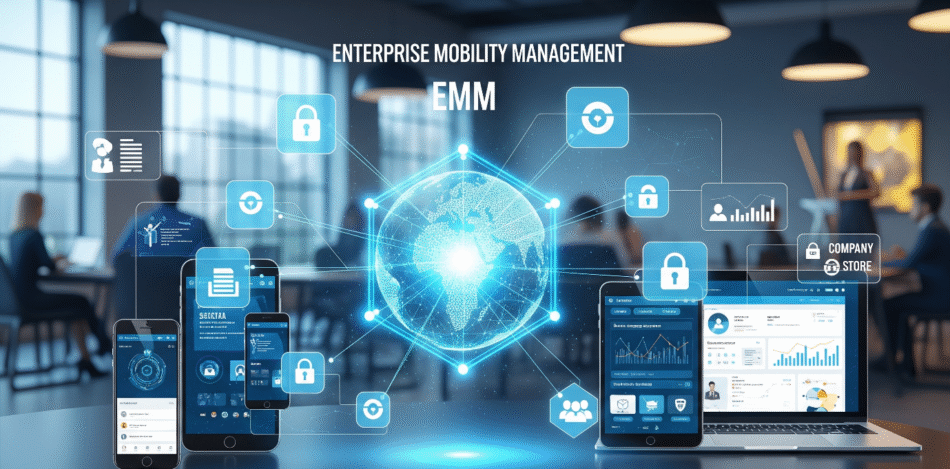

The global shift toward remote and hybrid work has positioned enterprise mobility management (EMM) as a critical pillar of modern IT strategy. Organizations are increasingly challenged to manage a diverse fleet of mobile devices, applications, and data without compromising security or compliance. According to the Research Intelo, this convergence of mobility, cloud, and security priorities is redefining the EMM market’s growth trajectory, setting the stage for its next evolution.
The global shift toward remote and hybrid work has positioned enterprise mobility management (EMM) as a critical pillar of modern IT strategy. Organizations are increasingly challenged to manage a diverse fleet of mobile devices, applications, and data without compromising security or compliance. According to the Research Intelo Report, the global enterprise mobility management market was valued at USD 14.2 billion in 2024 and is likely to reach USD 111.6 billion by 2033, expanding at a CAGR of 24.1%. This convergence of mobility, cloud, and security priorities is redefining the EMM market’s growth trajectory, setting the stage for its next evolution.
What Is Driving the Surge in EMM Adoption?
The proliferation of smartphones, tablets, and mobile-first workflows has amplified the need for centralized control over device usage and application access. Industries such as BFSI, healthcare, manufacturing, and IT services face heightened cybersecurity risks as employees access corporate resources from varied locations and devices.
1. Bring Your Own Device (BYOD) Expansion:
As personal device use for work grows, enterprises are adopting advanced EMM solutions that balance convenience with strong security. AI and ML integration enhance these platforms with real-time threat detection, predictive analytics, and automated policies, streamlining IT operations and enabling seamless digital experiences.
2. Digital Transformation Initiatives:
According to the Research Intelo, sectors such as BFSI, healthcare, retail, and manufacturing are accelerating digital transformation efforts, necessitating mobile-enabled workforces, secure corporate resource access, and enhanced collaboration, all supported by scalable EMM solutions.
3. Increasing Number of Mobile Devices:
The rising global mobile device count is driving demand for EMM. Cloud-based EMM solutions offer scalability, flexibility, operational efficiency, and cost advantages. Mobile application management, focusing on app-level rather than device-level control, has become critical, especially as cyberattacks on devices and business-sensitive data grow more frequent.
How Are Technology Trends Shaping the Market?
Emerging trends are transforming EMM into a more holistic, intelligence-driven ecosystem:
• Integration with Unified Endpoint Management (UEM): Vendors are merging EMM capabilities with desktop and IoT management for a single-pane-of-glass approach.
• AI-Driven Threat Detection: Machine learning algorithms are enhancing mobile security by detecting anomalous device behaviors in real time.
• 5G-Enabled Mobility: High-speed connectivity is fueling richer mobile applications, increasing the need for agile policy enforcement and bandwidth management.
• Zero Trust Architectures: Identity-centric security frameworks are being embedded into EMM solutions to validate every device and session.
What Challenges Could Restrain Growth?
While the market outlook remains strong, several headwinds persist:
1. Complexity of Integrating EMM Solutions:
Large enterprises with legacy systems often face high costs and extended deployment timelines when integrating EMM, especially when adapting to varied security needs across multi-user networks.
2. Regulatory Compliance and Data Residency:
Privacy concerns and compliance requirements, especially in regions with strict regulations, are slowing cloud-based EMM adoption. The evolving cyber threat landscape also adds pressure for more resilient solutions.
Which Regions Are Leading the Transformation?
North America: North America leads the EMM market with about USD 5.7 billion in 2024, driven by advanced digital infrastructure, high mobility adoption, and major tech vendors. US and Canadian firms use EMM to enable remote work, boost security, and foster innovation.
Europe: Europe’s EMM market, valued at about USD 3.4 billion in 2024, is driven by strict data privacy laws, regulatory compliance, and digital innovation. The UK, Germany, and France lead adoption, with the General Data Protection Regulation (GDPR) pushing demand for secure, compliant EMM solutions.
Asia Pacific: Asia Pacific’s EMM market, worth USD 2.8 billion in 2024, is the fastest-growing with a projected 27.3% CAGR through 2033. Growth in China, India, Japan, and South Korea is fueled by rapid digitalization, urbanization, and mobile adoption, driving demand across BFSI, healthcare, retail, and manufacturing.
What Does the Competitive Landscape Look Like?
The EMM market is characterized by a mix of established technology giants and specialized mobility-focused vendors. Companies such as VMware, IBM, Microsoft, Citrix, and MobileIron continue to innovate through AI integration, security enhancements, and strategic partnerships. Competitive differentiation is increasingly tied to scalability and cloud deployment flexibility, advanced analytics for mobile usage insight, and comprehensive cross-platform support.
Outlook: Is EMM Poised to Become the Backbone of Future Work Environments?
As mobile-first operations become standard, EMM is evolving into an integrated digital workplace enabler. The convergence of AI, 5G, and zero trust models is set to drive accelerated adoption, positioning EMM as both a security safeguard and a strategic driver of productivity, compliance, and agility.
